The Family Legacy Project Behind Marvelisa Legacies

Seven Years Apart, and a Lifetime of Art After

Marvelisa Legacies is Lisa Levitt’s family legacy project. It preserves and shares the Hungarian heritage her family carried across three generations through her grandmother’s paintings, her mother’s jewelry, and the letters that connected Budapest and New York through war, separation and a new start.

THE FULL Story

A Hungarian Jewish Family History

This Hungarian Jewish family history covers a century in five chapters, from a Budapest childhood under the Austro-Hungarian Empire to a jewelry studio in New York.

Budapest in the Last Years of the Austro-Hungarian Empire

Lisa’s grandparents Leslie and Elizabeth Fay were both born into prosperous Jewish families in Budapest as the Austro-Hungarian Empire neared its end. Elizabeth showed a talent for painting early, and her parents enrolled her at the Académie Colarossi in Paris, one of the few art schools in Europe that admitted women on equal terms with men. She returned to Budapest, married, and had a daughter.

1939: Leaving Hungary on the Eve of World War II

In 1939 the couple traveled to New York and came to understand that they could not go back. Their infant daughter Marian was still in Budapest. The family lived apart for seven years, through the whole of the war, before they were reunited in New York.

A Hungarian Immigrant Family Starts Again in New York

Reunited after the war, the family rebuilt. Lisa’s grandfather Leslie kept Hungarian cultural traditions alive through his trade, and her grandmother Elizabeth kept painting. In Hungary, the companies the family had owned were lost to communist nationalization, which closed the door on the life they had left.
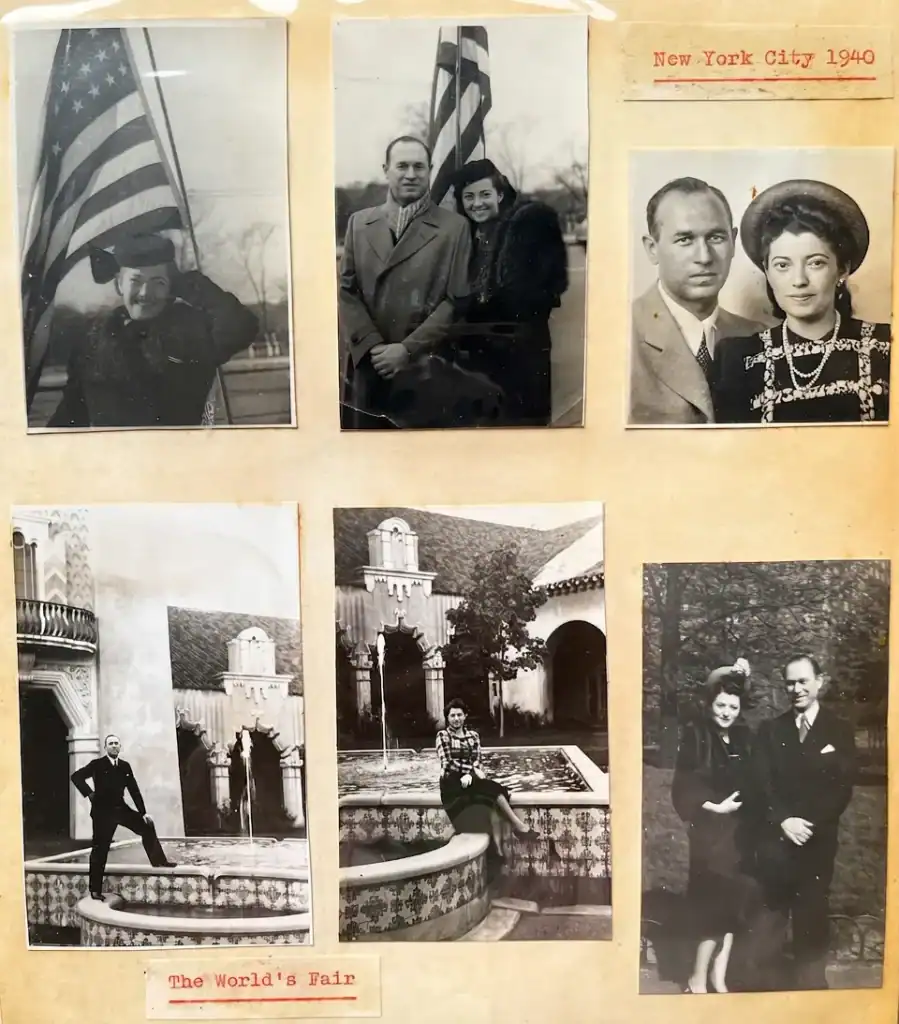
Family album page with 1940 photographs of Leslie and Elizabeth Fay from New York City and the New York World's Fair
A page from the family album: Leslie and Elizabeth Fay in New York City and at the World’s Fair, 1940.

Mayfair Gallery in Manhattan, 1968 to 1983

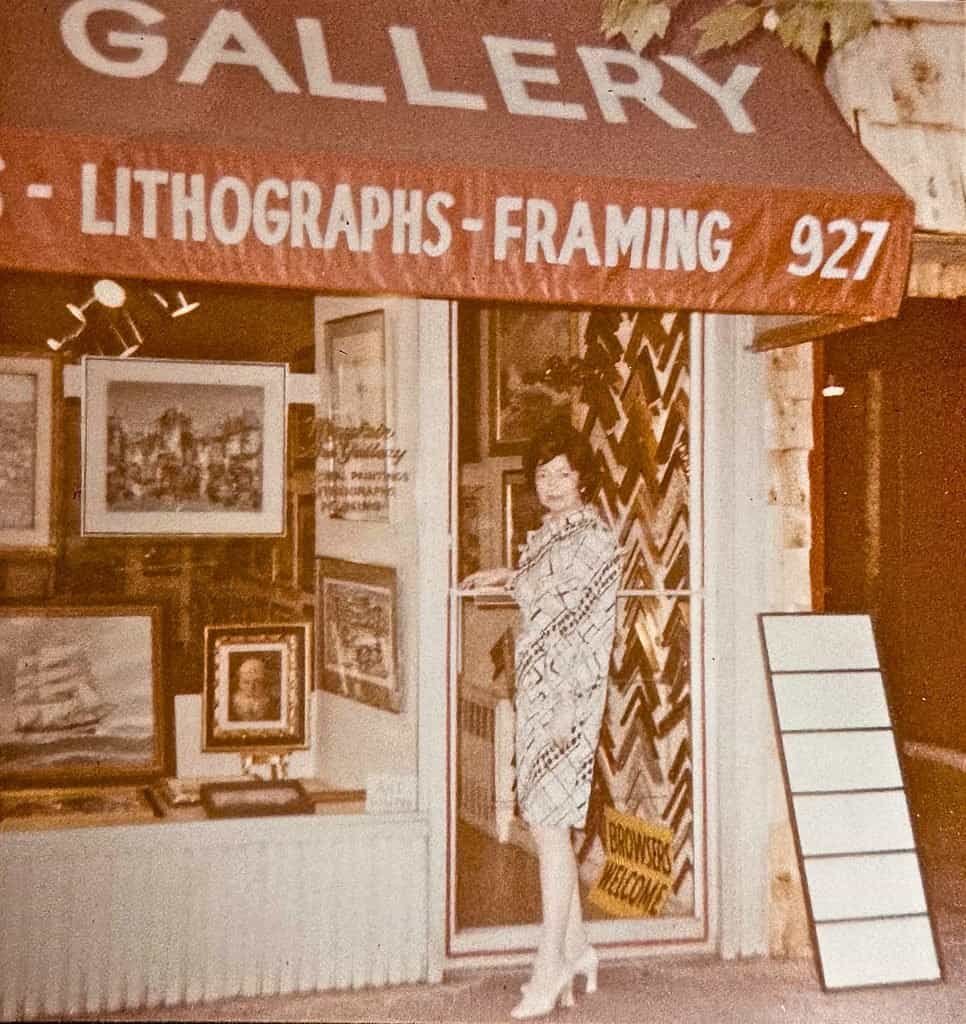
In 1968 the couple opened Mayfair Gallery together. Lisa’s grandfather Leslie Fay died two years later. Her grandmother Elizabeth Fay, then sixty, ran the gallery alone for thirteen more years and supported the artists she believed in. She closed the gallery in 1983 and died that same year, leaving behind paintings, letters and sketchbooks that span six decades.
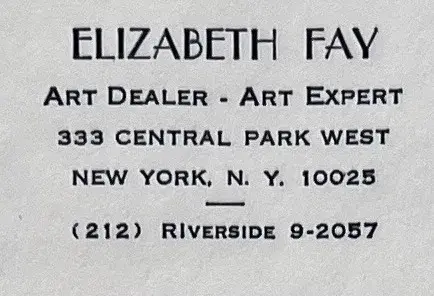
Business card for Elizabeth Fay, art dealer and expert in New York
Elizabeth Fay in the doorway of her gallery in the 1970s, under an awning reading Gallery, Lithographs, Framing

“It is good to be smart, but better to be lucky.”
— Elizabeth Fay

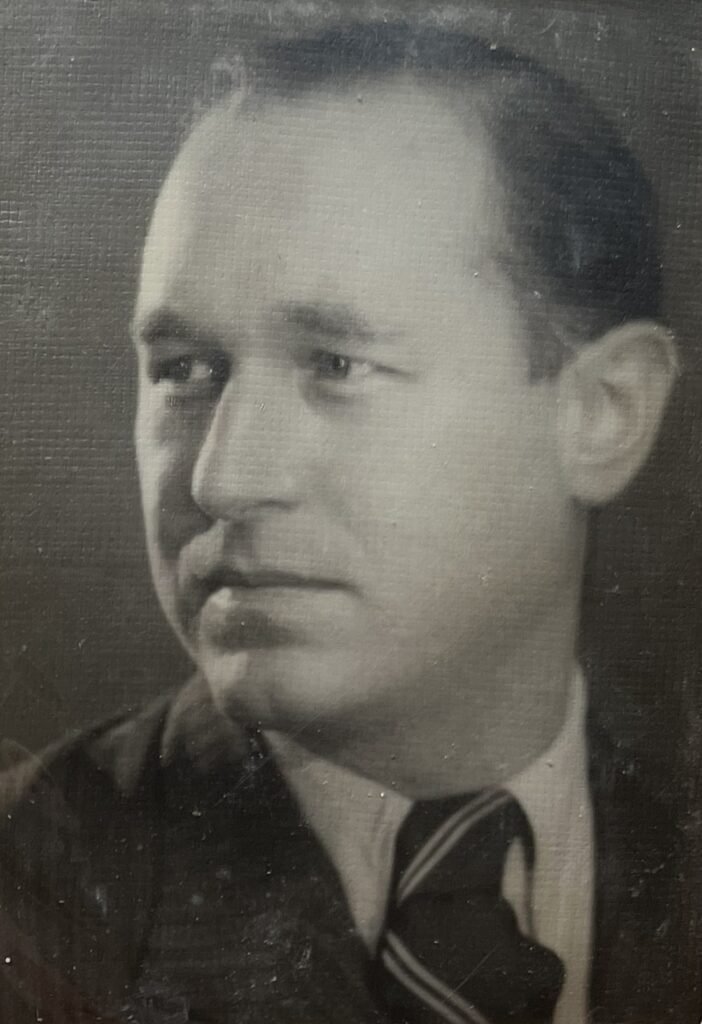
Black and white portrait of Leslie Fay, born László Fuchs in Budapest

About ELIZABETH FAY

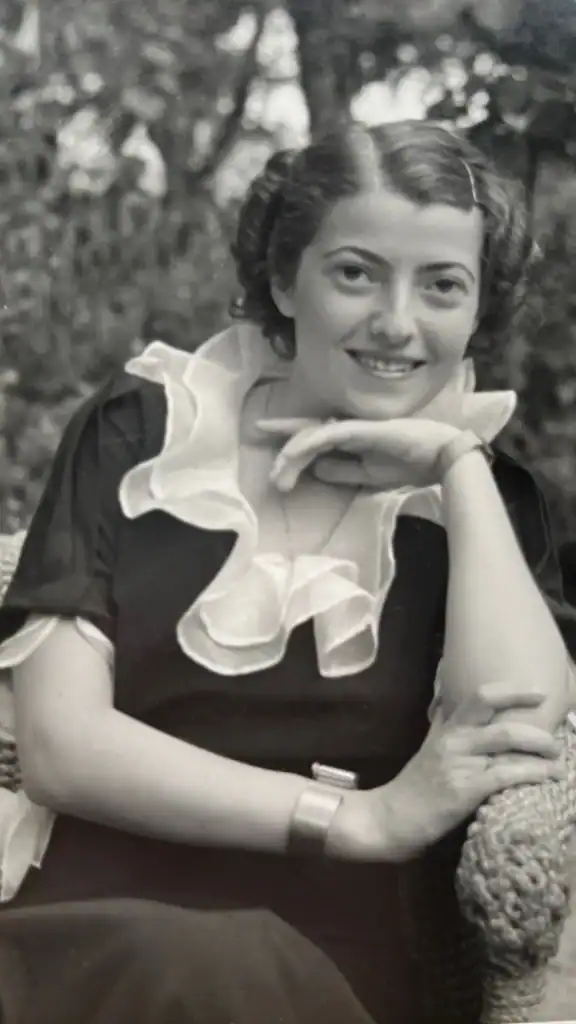
Elizabeth Fay was born Erzsébet Spiegel in Budapest in 1914, into a Jewish family. Her wealthy parents provided her the opportunity to study art in Paris, offering horizons wider than those usually available to daughters of her class and faith.

In 1939, with anti-Jewish laws tightening, a business trip to the New York World’s Fair gave Elizabeth and her husband Leslie a plausible reason to scout life in the US. However, Hungarian officials refused an exit visa for their one-year-old daughter Marian. As a result, when WW2 closed borders, the Fays were separated from their daughter and parents. Elizabeth navigated many challenges as an immigrant whose family was under attack by Nazis and Communists.

As a talented artist, Elizabeth used her creativity to reinvent herself repeatedly. Art was central to how she engaged with the world, inspiring her evolution from immigrant housewife to entrepreneur.

In her 40s, Elizabeth expanded her art knowledge as a dealer and, at fifty-four, opened the Mayfair Art Gallery in New York City.

Widowed soon after, she expanded her skills and confidence, managing the gallery alone for thirteen more years. By 1973, Elizabeth was one of only two official representatives in New York for Corita Kent, a globally known pop artist. Mayfair’s Corita solo exhibit would stand as the artist’s last in New York for nearly four decades.

About Leslie Fay

Leslie Fay was born László Fuchs in Budapest in 1901. His father, Vilmos Fuchs, was connected to the Janina Cigarette Company, and the family name was later anglicized from Fuchs to Fay in America.

In 1939, Leslie traveled to New York with his wife, Elizabeth, for the World’s Fair. Their trip became the beginning of an unexpected exile. Unable to return to Hungary, they were separated from their daughter, who remained behind with Leslie’s father, Vilmos. The separation lasted until 1946 for Marian and until 1957 for Vilmos.

In New York, Leslie worked in the import business and became an active figure in the Hungarian Jewish community. He served as vice-president of the United Hungarian Jews of America and remained on its board until his death. When he died, Az Ember honored “the memory of Vice-President László Fay” and wrote that he left behind his inconsolable wife, Erzsébet Fay.

His family’s story carried the weight of war, exile, and political upheaval. The Fuchs family business and property in Hungary were nationalized by the Communist regime in 1949. His aunt, who was married to the painter Béla Kádár, was killed in the Holocaust with their two sons.

Letters became one of the ways Leslie remained connected to his family across distance and disruption. Between 1951 and 1959, he wrote around 30 letters to his daughter Marian, along with approximately 40 more written jointly with Elizabeth. In May 1958, after his father finally reached “the free soil of America,” Leslie wrote Vilmos’s eulogy.

Leslie died in 1970. After his death, Elizabeth continued running the Mayfair Gallery alone.

Then Leslie and Elizabeth’s daughter, Marian, took the art off the walls and taught it to move.

Marian Fay Levitt and the Family’s Artist Legacy

The family’s creative line continued with Lisa‘s mother, Marian Fay Levitt, a New York studio art jewelry designer and instructor at the Fashion Institute of Technology. Her bold statement pieces, made from materials she gathered across 60 countries, now form the Marian Fay Levitt collection.

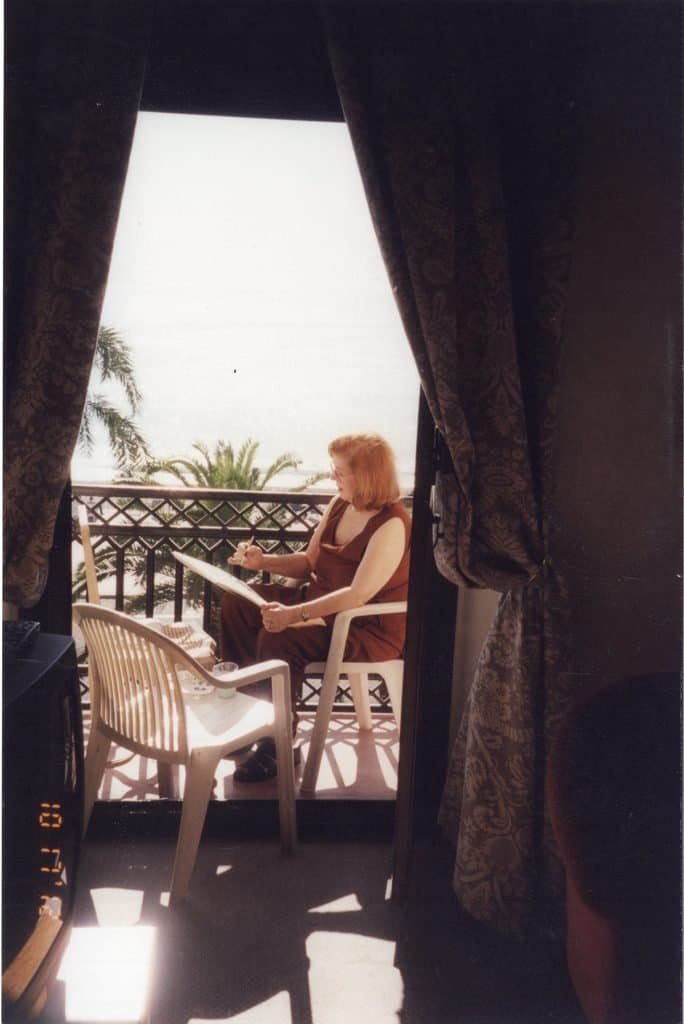
Marian Fay Levitt reading on a sunlit balcony framed by dark curtains

About John Fay

Born in New York in February 1942, in the early years of the war, while his parents were unable to return to Hungary and his sister Marika was still in Budapest in Vilmos’s care. The family called him Johnny, or Johnnyka. He was four when he met his sister for the first time, on her arrival in America in 1946.

He spent the summers of the early 1950s with the family on Long Island at Sayville, on Cape Cod at Cotuit, and in Catskills hotels, and later at summer camp and Boy Scout camp. Between 1951 and 1954 he wrote four letters to Marian at camp. They include an Ogden Nash poem about a kitten, a proud list of new skills (riding a two-wheeler, chess, swimming lessons) and his own handwritten Top 23 from the radio show Make Believe Ballroom.

At Stuyvesant High School he was buglemaster and kept a stamp collection. When Vilmos finally reached New York in 1957, he joined the family’s household for the last thirteen months of his life.

In 1958 Johnny entered NYU’s engineering school, class of 1962, where he joined ROTC and a fraternity.

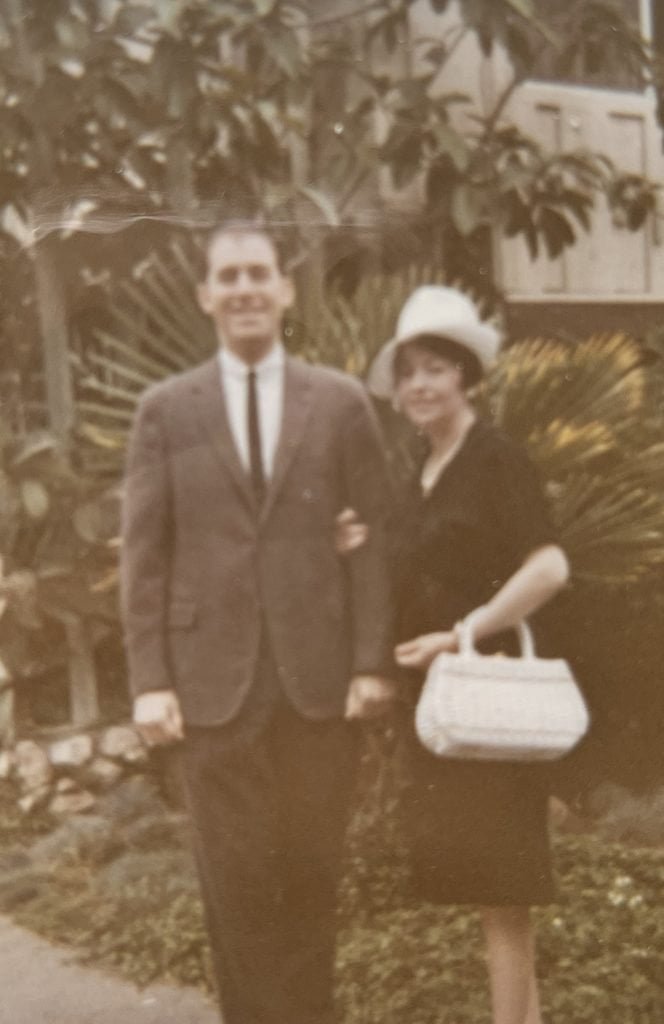
John Fay and his mother Elizabeth Fay in Los Angeles
A statement necklace with colorful beads by Marian Fay Levitt.
Lisa Levitt wearing a statement necklace with gold accents by Marian Fay Levitt.

THE WORK TODAY

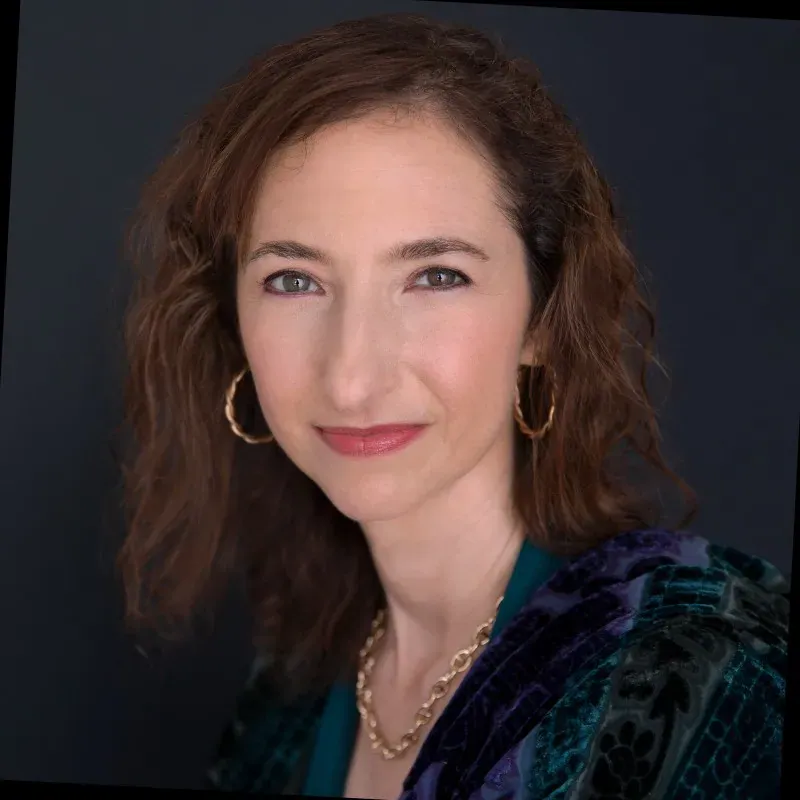
Lisa Levitt, Writer and Archivist

Lisa Levitt is a writer and archivist, granddaughter of immigrants who painted their way through upheaval. She gathers their scattered artworks and documents, weaving them into narratives that honor loss, survival, and the quiet power of handmade beauty.

Her work reaches beyond the personal archive into the wider conversation about memory, migration, and identity, across documentary film, writing, theatre and exhibition.

Passionate about helping other families preserve their own history, she documents the how-to side of the work on the blog, from organizing a family archive to turning it into stories.

Family History Storytelling in Print, on Film and on Stage

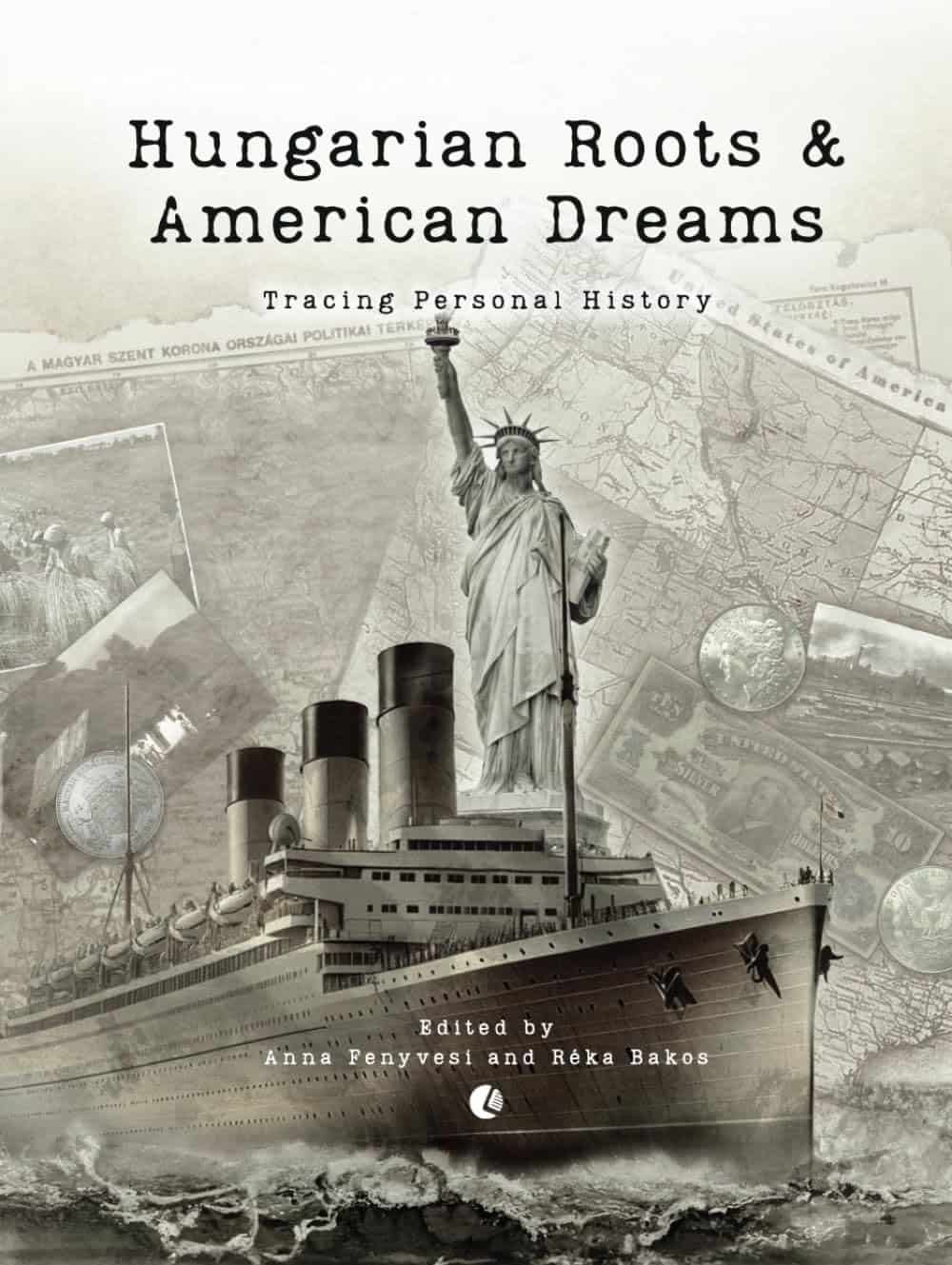
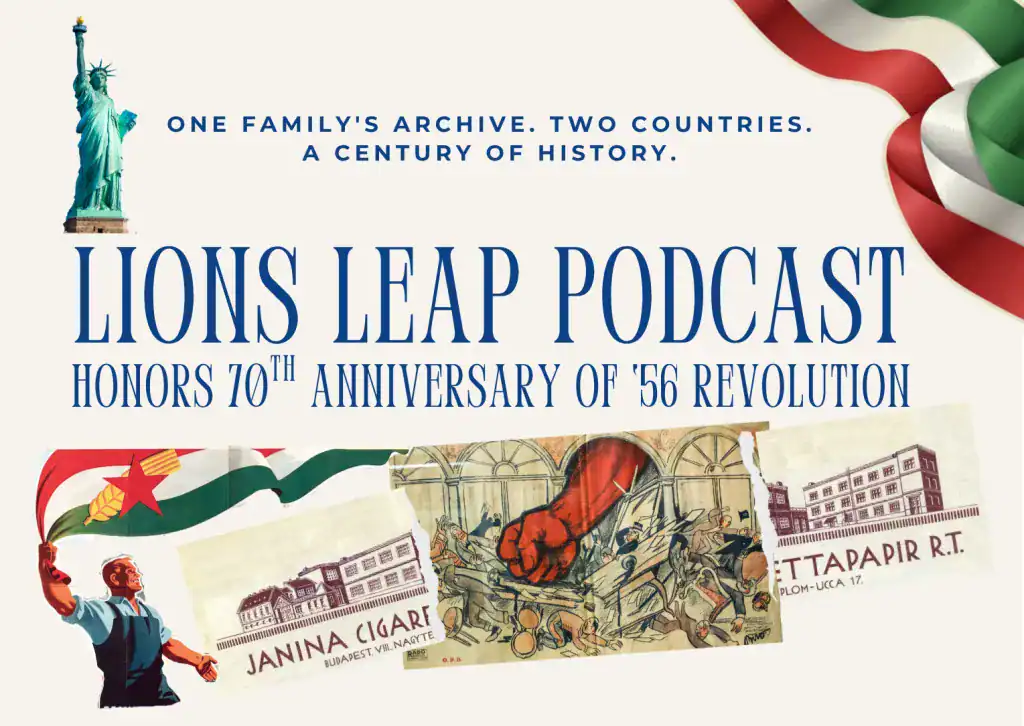
Her chapter in the anthology Hungarian Roots & American Dreams: Tracing Personal and Local History traces this immigrant family history. A family history documentary is in production and a play is in development. The family’s story is also part of an exhibit of 250 immigration stories. Lion’s Leap, a podcast built from the family’s letters, is on the way.

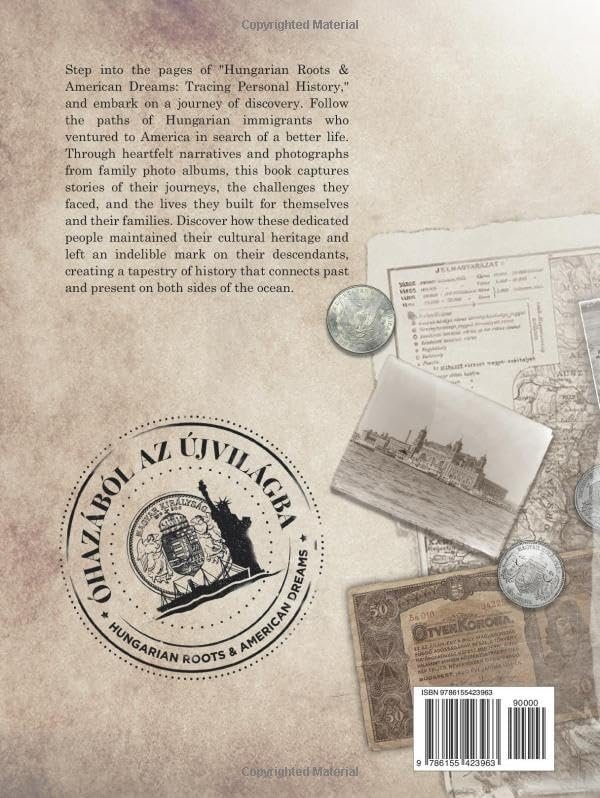
Front cover of Hungarian Roots and American Dreams: Tracing Personal History Back cover of Hungarian Roots and American Dreams: Tracing Personal History

In Print: Hungarian Roots & American Dreams

Hungarian Roots & American Dreams is an anthology of Hungarian immigrant family stories, and Lisa’s chapter traces her grandparents’ journey from Budapest to New York.

Archival family photo from Budapest, showing a group of people in traditional attire by Marian Fay Л.

An Exhibit of 250 Immigration Stories

For the 250th anniversary of the United States, the Hungarian American Coalition is honoring Hungarian Americans who helped shape the country, and Elizabeth’s journey from painter to Manhattan gallerist is part of that celebration.

Statement jewelry with family history symbols by Marian Fay Levitt.

Lion’s Leap, a Hungarian History Podcast

COMING SOON
Lion’s Leap turns the family’s letters into a podcast, with voice actors reading the originals and historians adding the context around them. Episodes move through a century of Hungarian and Hungarian-American history.

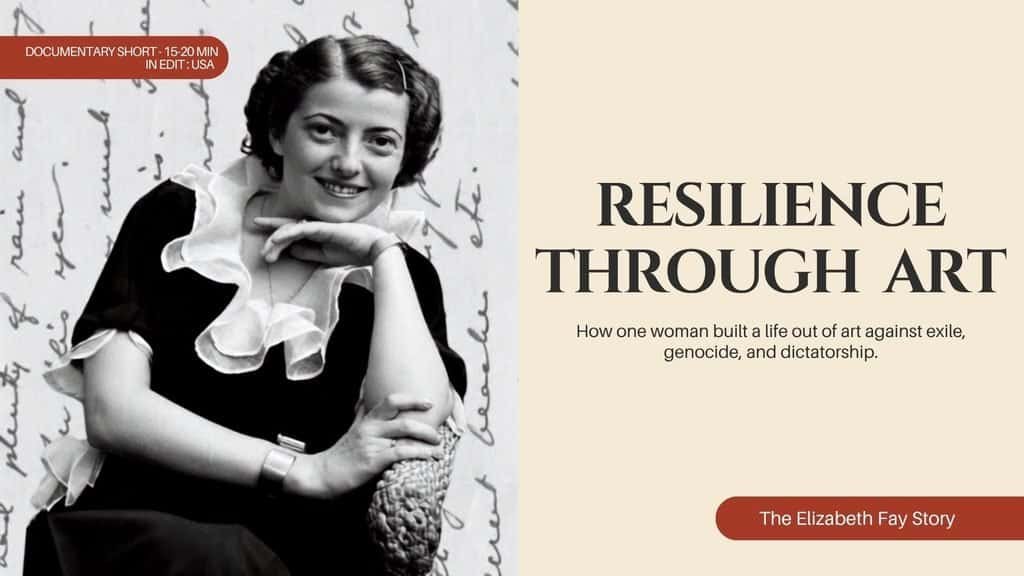
Black and white archival photo of a woman smiling, wearing a dark dress with a ruffled collar by Mar.

A Family History Documentary, in Production

A documentary drawn from the family archive is in production, bringing Elizabeth’s paintings, the family letters and the people behind them to the screen.

From Family Letters to the Stage

The family’s story is being developed into a play, giving the voices in the letters a live audience.

Preserving Family History

“An archive is never finished. It grows as new letters surface, new connections emerge, and new forms are found to carry the story forward.”
— Lisa Levitt

Scroll to Top